Introduction
In the overseas automotive aftermarket, custom body kits have gradually moved toward OEM+ style and widebody body kit style. Building more differentiated, personalized kits has become a real trend. A bespoke body kit needs both a unique look and non-destructive installation.As a one-stop OEM/ODM factory specializing in auto parts, this article will walk you through how a truly industrial-grade custom body kit is designed and manufactured from scratch, and lay out a clear process.
The Design & Manufacturing Process
A top-tier tuning body kit requires multiple stages from design to production.Every step is closely linked, and tolerances must be strictly controlled—otherwise you end up with scrapped molds, fitment issues, and other costly problems.A complete engineering manufacture process built to meet the demanding standards of ultra-luxury brands like Ferrari, Rolls-Royce, and Porsche.Now,the six standardized production steps, showing you how a modification body kit goes from concept to finished product.
Step 1:Concept Design & Digital Rendering
Concept design is the first step in aftermarket body kit production.Every customization is not a wild fantasy, but a creation based on respecting the original car.
- Determine the target vehicle: The most basic thing is to identify the model the kit will be installed on. Next, you have to decide the design should follow the mainstream OEM+ style or the performance-oriented widebody style.This also influence the subsequent material selection and design approach.
- Analyze the original design: Engineers deeply analyze the chassis structure and body line flow of the original car. The subsequent design must follow the original car’s design language and maintain natural transitions in the contours.
- Digital rendering: Once the facelift body kit design is complete, using digital rendering technology to present 2D and 3D installed views. You can clearly see the paint color, stance, and proportions of the product on the car.If there are any design issues, you can discussed and modified at this drawing stage at any time.
Step 2:Ready Data
After the concept design is confirmed,begin data collection from the source.Because accurate data is one of the most critical parts of building a bolt on body kit.A car body is not a regular geometric shape, and traditional manual measurement cannot reproduce it precisely.High-precision 3D scanning is the foundation for ensuring 100% perfect fitment.
- High-Precision 3D Scanning: By comparison physical mold casting or manual measurement,you can choose industrial-grade megapixel 3D laser scanners. The equipment captures a large amount of precise surface point cloud data, scanning everything from the original body structure to chassis data, with accuracy down to the millimeter level.It ensures a 1:1 digital twin model of the vehicle is generated, reproducing all exterior shapes and mounting points.
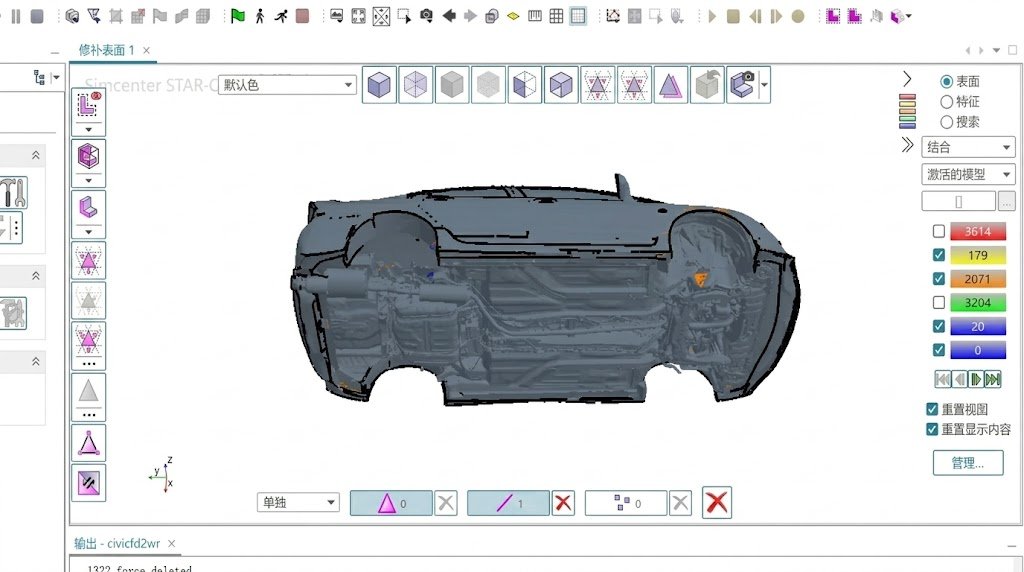
- Reverse Engineering: The point cloud data from 3D scanning cannot be directly used for mold making. It needs to be imported into professional software for in-depth reverse engineering.These massive point clouds are then converted into editable CAD solid models or high-precision surface models.
Step 3: Industrial Modeling
Industrial-grade modeling determines the final appearance quality and assembly accuracy of the product. This is a comprehensive engineering design that needs to balance appearance, structure, assembly, and performance at the same time.
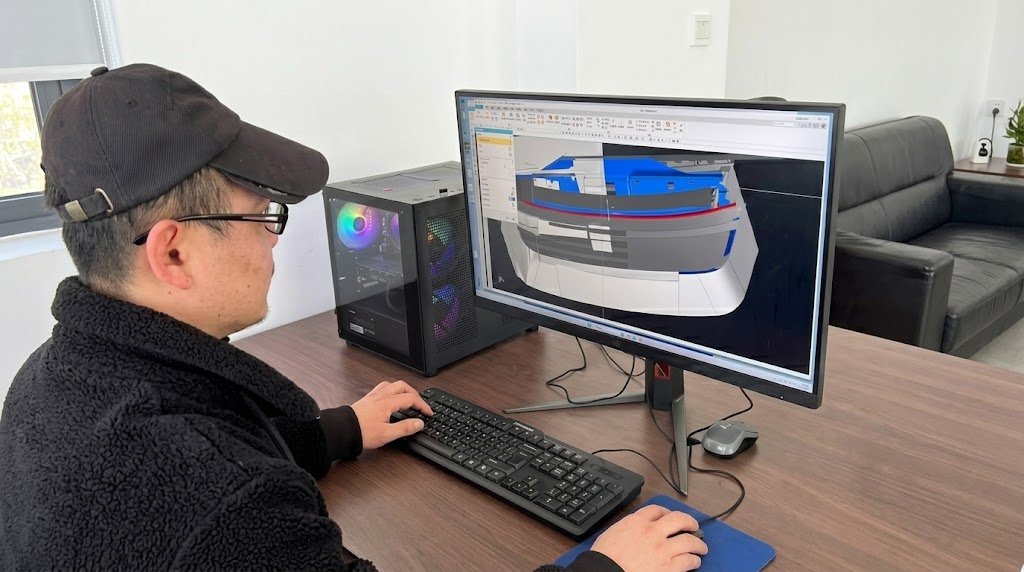
- CAD Engineering: During the digital modeling stage, every step involves high-precision calculations. The surfaces must achieve Class-A surface quality, with G2 (curvature continuity) or even G3 (higher-order continuity) between surfaces.This is the highest requirement for exterior surface quality, ensuring that light reflects smoothly across the surface without any visible breaks.In addition, this stage is also reserve assembly gaps in all parts.Leaving adjustment margin and reduce your installation difficulty.
- Aerodynamic Refinement: Use digital simulation to adjust airflow direction and simulate the aero body kit’s performance.By precisely calculating the frontal intake area of the front air ducts, the guide angles of the front lip, rear diffuser, and rear wing.DIY bodykit maintains excellent structural integrity when you even at extreme speeds.
Step 4: CNC Precision Mold Making
Once the CAD digital drawings are confirmed and approved,moving into the mold manufacturing stage. The precision of the mold directly affects the surface quality of the product.
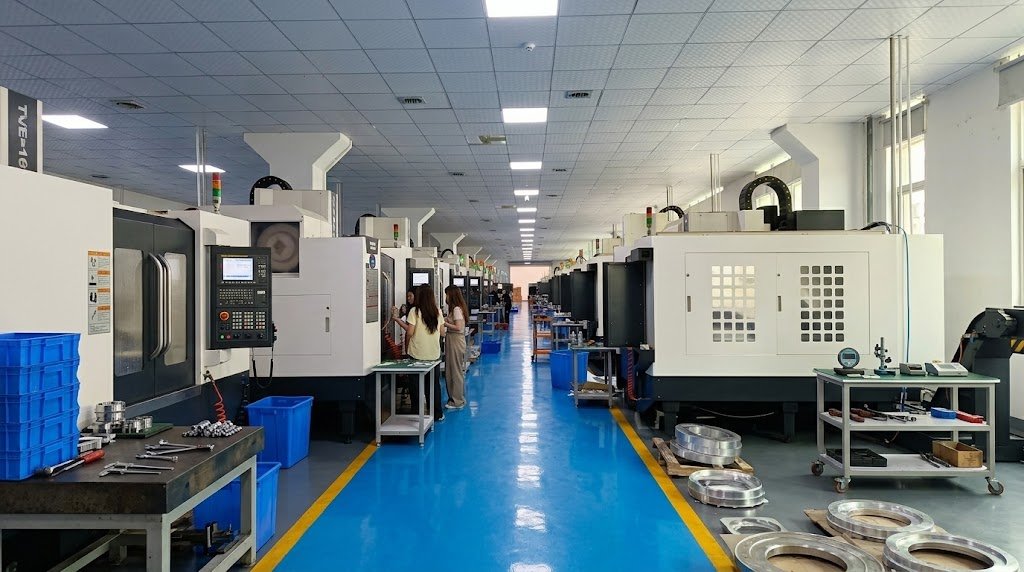
- CNC Tooling: In pursuit of the highest quality,the process fully adopts industrial-grade five-axis CNC machining centers. The CAD data is directly converted into machine instructions to complete mold manufacturing. Through CNC, mold perform both rough machining and finish machining,achieving refined surface treatment.
- Mold Verification: After the mold is completed, must be conduct the first trial molding to check the product’s forming quality, dimensions, surface finish, and demolding condition. Based on the trial results, will determine whether mold adjustments are needed. Then continue fine-tuning until everything passes inspection. When the first is test-fitted on the vehicle and confirmed correct, only then can move into formal mass production.
Step 5: Material Selection
Currently, the most commonly used materials in the body kit industry are FRP, plastic, and carbon fiber. Material selection needs to be considered from multiple angles based on your driving needs and budget.
| Material | Advantages | Disadvantages | Applicable |
| PP / ABS | High flexibility;strong impact resistance; easy to paint and installation. | Individual physical weight is slightly heavy, and it is prone to breaking at low temperatures. | Daily street car “old-to-new upgrade (Facelift)”. |
| FRP | Extremely low mold development cost, flexible styling, and easy to repair. | Brittle and extremely fragile; sanding requires skill and patience. | Extreme widebody modification projects, entry-level modifications, drift cars. |
| Wet carbon/ dry carbon | Ultimate lightweight, high strength, perfect texture, and no yellowing after long-term sun exposure. | High procurement cost, difficult repair, rampant counterfeits. | Exclusively for Ferrari, Lamborghini, Rolls-Royce high-performance cars, track use. |
Step 6: Vehicle Test Fitting
Real-vehicle test fitting is the final step of the development process. It is a key step to verify the conversion body kit if can perfect plug-and-play.
- First Article Inspection: Compare the physical dimensions of the first article with the CAD drawing data to ensure all dimensions fall within the tolerance range.
- Mounting Points and Gap Inspection: First,verify the mounting points. Check whether the clips, screw holes, and pre-drilled holes on the product align perfectly, ensuring excellent stability at high speeds. Next, check the gaps and flushness, requiring the gap width to be consistent along the entire seam, with no uneven step differences between parts.
- Interference Check: In the final step of test fitting, test whether the parking sensors and cameras have enough clearance and are not obstructed. At the same time,making sure there is no contact between the doors, hood, front lip, fender flares, and other parts.
FAQ
1. If Have a Custom Request, Can Shanghai CS Auto Parts Co., Ltd. Exclusively Develop and Build a Custom Body Kit ?
A:Of course. In fact,our factory has over ten years of production experience, with independent workshops and engineers, and is fully capable of development. As long as the minimum order quantity is met, we can carry out exclusive design and mold making according to your requirements, creating a dedicated mold.
2. How Long is the Lead Time for A Completely Automobile Body Kit?
A:The lead time depends on the complexity of the project. A custom kit requires quite a few steps.A brand-new custom development project starting from scratch depends on design difficulty, material selection, and other factors. From 3D scanning, modeling, and mold making to first article testing, it takes at least one month.
3.During the Custom Body Kit Process, Can Design Details be Modified?
A:Yes, they can be modified. During the modeling stage, modifications only require adjusting the CAD model. During the mold making stage, modifications require changing the mold, which costs more time and money.Once the product enters mass production, major changes are no longer possible—only things like adding mounting holes or changing the surface finish can be done.
4.Will Repeated Use of the Mold Affect Product Quality?
A: Guarantee the quality of every product. Because we implement Mold Lifespan Management for CNC molds.Once a mold reaches the specified number of demolding cycles.If routine laser re-inspection detects any micron-level tolerance drift, the mold is immediately scrapped and a new mold is precision-machined from the CNC data.
5.Will the Custom Body Kit Samples Be the Same As the Mass Production Parts?
A:Yes. The mold used for the samples is the same as the mold used for subsequent orders, so the basic dimensions remain consistent.After the sample is confirmed, every mass production batch is compared against the sample, and production only continues after confirming there is no deviation.
Final thoughts
Make a complete body kit for cars requires multiple steps. From A to Z: Concept design → data acquisition → industrial modeling → material selection → first article test fitting. Every product from Shanghai Bamboo is carefully crafted to ensure 1:1 precise fitment.Trust us,the best choice for upgrading luxury cars before and after.Welcome to inquire.