Introduction
In the global wave of luxury car modification, car bodykit focus on vehicle exterior and gradually become the first choice of the tuning community. Select the most suitable upgrade plan, it can shorten project working hours and greatly increase profit margins. This article will start from zero, elaborating in detail what a body kit is, how to choose one, and how to install it,so it is a comprehensive, hardcore knowledge guide.
What is a Body Kit?
Auto body kit is a set of aftermarket modification parts that replace or are installed onto the original factory (OEM) exterior of a vehicle. A full body kit achieve an upgrade of both appearance and performance while realizing personal customization. Depending on different needs, some Conversion body kits are quite rich in content, while others only include basic parts.
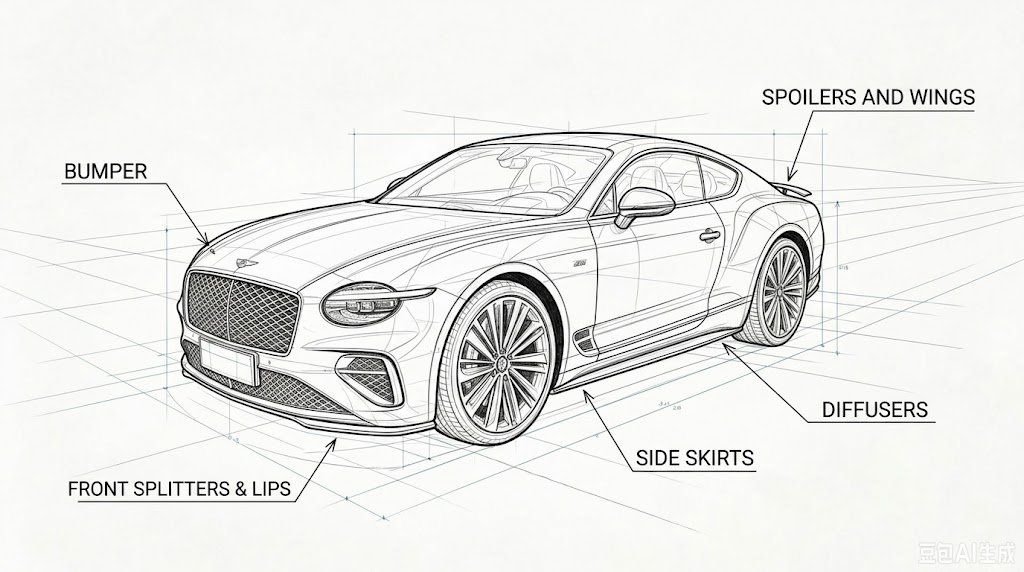
Generally speaking, a standard highly integrated “core body kit” must include the following components:
- Front and Rear Bumper Assemblies:change the vehicle’s front fascia and rear profile.
- Front Splitters & Lips:attached to the bottom of the front bumper to reduce front-end lift.
- Side Skirts:panels installed below the doors to prevent high-pressure air from rolling underneath the chassis.
- Spoilers and Wings:provide rear-axle downforce
- Diffusers:Located under the rear bumper to accelerate under-chassis airflow
Why Replace the Body Kit?
Choosing to replace a custom body kit is never merely about aesthetics.It is the most effective strategy to unlock bespoke aesthetics, track-level aerodynamics, and cost-effective facelift opportunities.
Visual Personalization
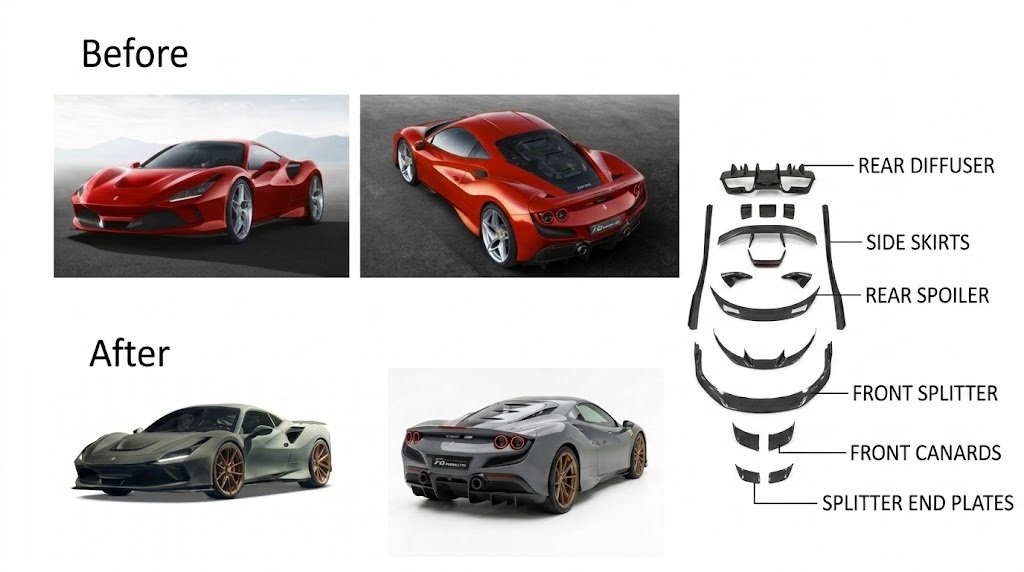
For luxury car owners such as Ferrari and Lamborghini, the factory-level appearance cannot fully satisfy their pursuit of personalization. Offering a car body kits helps you customize a more aggressive styling (for example: Mansory style, widebody style), highlighting your own personality and taste.
Performance Enhancement
Hardcore track enthusiasts and performance-driven customers are well aware of the aerodynamic gains. Well-designed bolt on bodykits, based on geometry, dynamics, and physics, help the vehicle reduce lift under the car, increase downforce, and utilize airflow to achieve an extreme increase in speed. For example, a aero body kit for the Ferrari 599 GTB Fiorano can reduce lift by 40% when driving at a speed of 200 km/h.
Replacement of Damaged Parts
Accident repair is a customer need you frequently encounter. When the front end or rear of a customer’s vehicle is damaged, “modification in place of repair” is a more cost-effective refurbishment solution. For the same price, you can install a modification kit with a more stylish design than the factory one, ensuring safe driving while comprehensively upgrading the car.
Vehicle Value Preservation and Refurbishment
“Old-to-new upgrade” is one of the core demands of vehicle upgrading. An old Range Rover upgraded to the latest appearance; a base Mercedes-Benz upgraded to the AMG sport package—achieving a major upgrade of the original vehicle at a relatively low cost. In fact, this old-to-new upgrade can perfectly conceal the damage of an old car and achieve a relative price premium in the vehicle’s value assessment on the second-hand market.
Body Kit Materials Explained
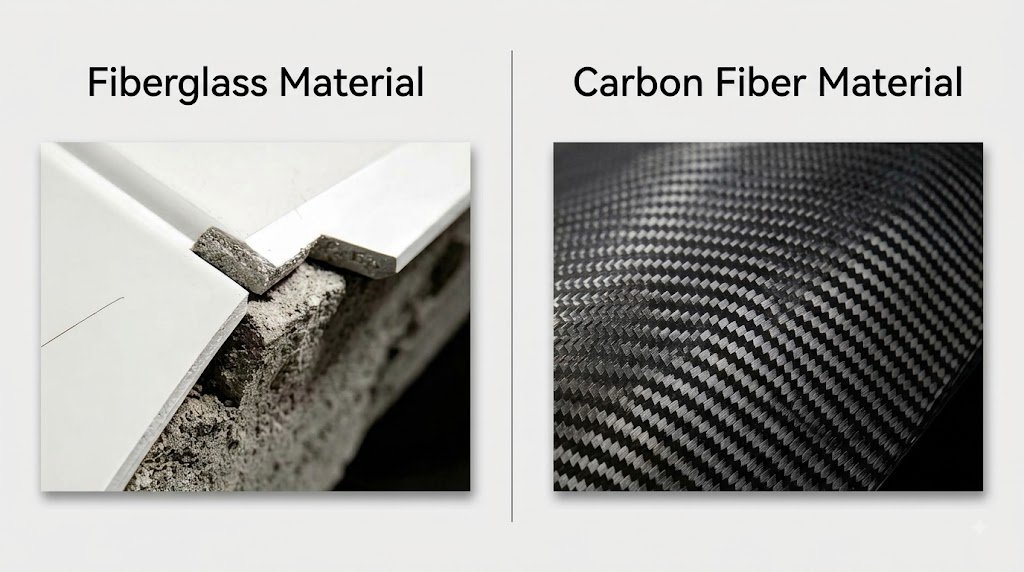
The material of a tuning body kit determines your purchase cost, installation difficulty, and profit assurance. This section sorts out the three most common materials: plastic, fiberglass, and carbon fiber.
| Material | Classify | Advantages | Disadvantages | Applicable |
| plastic | PP / ABS | High flexibility,strong impact resistance; easy to paint and installation. | Individual physical weight is slightly heavy, and it is prone to breaking at low temperatures. | Daily street car “old-to-new upgrade (Facelift)”. |
| FRP | FRP | Extremely low mold development cost, flexible styling, and easy to repair. | Brittle and extremely fragile; sanding requires skill and patience. | Extreme widebody modification projects, entry-level modifications, drift cars. |
| Carbon fiber | Wet carbon/ dry carbon | Ultimate lightweight, high strength, perfect texture, and no yellowing after long-term sun exposure. | High procurement cost, difficult repair, rampant counterfeits. | Exclusively for Ferrari, Lamborghini, Rolls-Royce high-performance cars, track use. |
Different Types of Body Kits
At present, body kits are mainly divided into three types, each with unique styles and characteristics.
Lip Kits / Add-on Kits
Lip Kits are the first choice for light modification, with additional installation without altering the original vehicle structure. It is a highly cost-effective modification solution for enhancing visual effects. Typically, components such as front lip, side skirts, canards, and mirror covers are fixed onto the original bumper using screws and 3M tape. The installation is extremely fast and flexible for removal, ensuring that you can complete the delivery on the same day.
Bumper Replacements / Full Kits
Full Kits completely change the original vehicle styling. The factory front and rear bumpers, side skirts, and other parts need to be fully removed and replaced with new components. While enhancing the visuals, it also offers driving benefits (such as reducing frontal area and designing air ducts). A Range Rover, for example, can be seamlessly upgraded to the latest SVR Sport style using Full Kits. Compared to Lip Kits, the installation time is longer and requires professional technicians for gap adjustment.
Widebody Kits
Installing widebody kits requires cutting the original metal fenders of the vehicle and adding fender flares/wheel arches to increase width. This cutting is an irreversible permanent modification to the original vehicle, but it is the go-to choice for hardcore track players. Therefore, its installation period is extremely long, the technical threshold is extremely high, and once a cutting error occurs, it will cause significant financial loss. Only the most professional engineers will take on such a job.
How to install a body kit?
Because the types of body kits vary, the difficulty of installation also varies.But what is consistent is, before modification,you should prepare the complete tools and equipment.
Step 1:Test Fitting
When you receiving new auto parts, first install them onto the car for testing, comparing the hole positions and fitment overview.
Step 2: Surface Preparation
After installation, sand the surface of plastic and fiberglass parts to prepare for subsequent painting. If it is a carbon fiber texture material, this step can be skipped.
Step 3: Painting
After precise color matching with the original car, then proceed with clear coat and baking, achieving a perfect paint finish on the kit.
Step 4: Final Assembly
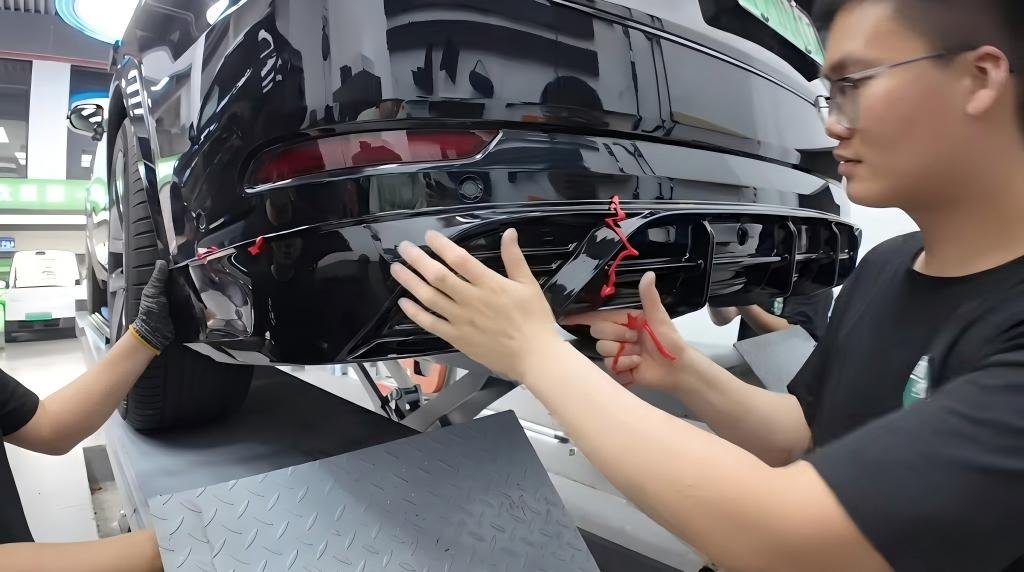
Two or more engineer are neede to install all components and reactivate the vehicle’s electronic systems. After ensuring all details are successfully debugged, the entire installation is complete.
The specific installation process can be referred to as follows:Step-byStep:Car Body Kit installation Ultimate Guide
FAQ
1. Q:What Factors Need to be Considered When Purchasing a Car Body Kit?
A:To ensure your project runs smoothly,focus on three key factors:
① Material. based on your budget, weight goals, and desired durability.
② Fitment. Prioritize Bolt on bodykits,prevents costly re-sanding.
③Compatibility.verify the exact chassis code and year to ensure proper installation and retain all OEM functions.
2. Q:What to Do if the Purchased Kit Has Insufficient Fitment?
A:When the fitment of the kit is too poor, first, refuse to force installation, to avoid causing the part to instantly fracture or become completely scrapped. Next, evaluate the cost of re-sanding. If the time cost and labor cost of repair far exceed the value of the kit, you should immediately contact the supplier for a return and refund.
3. Q:When Encountering Salt Snow Days or Sea Salt Mist by the Coast, Which Type of Kit is More Corrosion-resistant?
A: PP bodykit and carbon fiber kits have greater corrosion resistance. These two materials are essentially polymer non-metallic or composite materials, possessing absolute immunity to salt. Therefore, even when soaked in salt water, they will never oxidize or rust, making them an excellent choice in saline environments.
4. Q:Is it Easy to Put a Body Kit On?
A: The installation difficulty depends on the type of body kit you want to install. If you choose Lip Kits, you only need to perform the manual operation yourself by following the operation guide. However, if it is a Full Kit or widebody kit, professional tools and equipment are required, which can easily cause irreversible damage.
5. Q:What is The Service Life of a Body Kit in Daily Driving? And in Extreme Environments?
A:① Daily urban conditions, the service life of premium body kit averaging up to 7-10 years.
② In the cold weather, fiberglass can be used for an average of 1-2 winters; PP material can be used for 5-7 years; the carbon fiber body can be used for at least 7 years.
③ Driving on the track, fiberglass survives only 1-2 years;plastic body kit can last 3-5 years;dry carbon fiber can be used for up to 10 years.
Final thoughts
In the automotive aftermarket, through a comprehensive and in-depth analysis of body kits, this helps your team select the right body kit. If you want to purchase a worry-free kit with 100% fitment, please feel free to contact us. As an experienced export sales professional at Shanghai CS Auto Parts Co., Ltd., our factory’s products are all 1:1 molded and come with a credibility guarantee. Welcome to Inquiries.